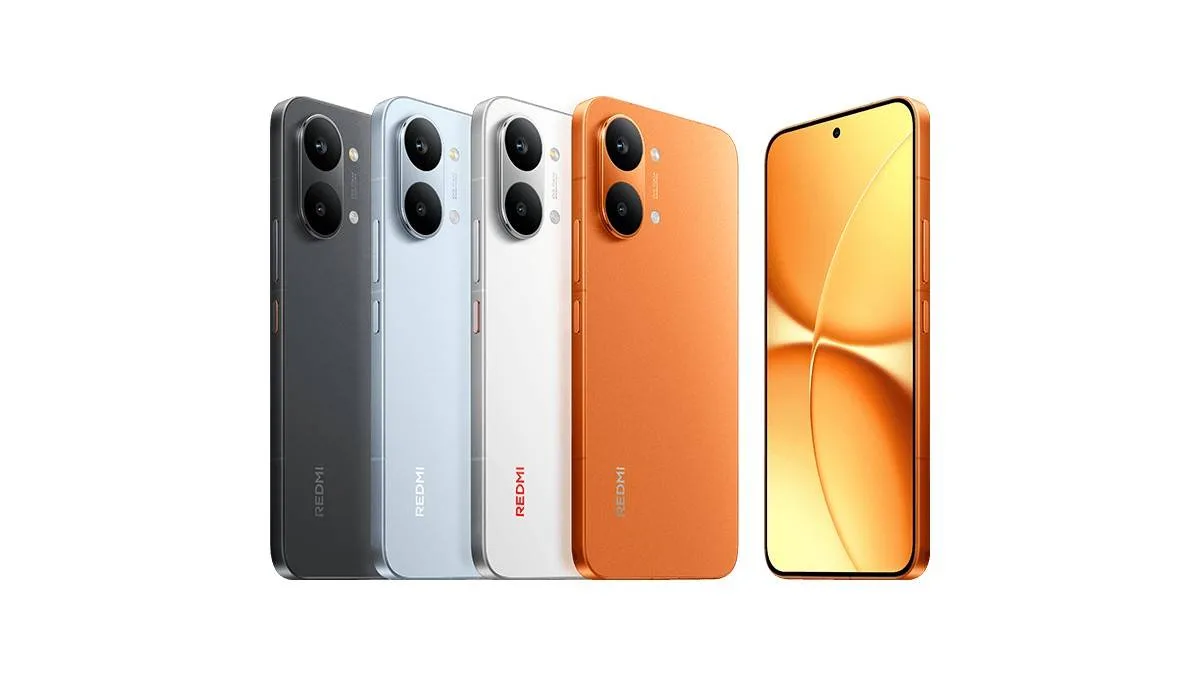
The Redmi Turbo 5 Max has officially debuted in the Chinese market, marking a significant structural evolution for Xiaomi’s performance-focused mid-range lineup.
Positioned as a direct response to escalating hardware demands and the shifting dynamics of premium mid-tier consumers, this new variant skips traditional nomenclature to establish a dedicated, high-end subsection within the sub-flagship space.
Incorporating advanced silicon-carbon chemistry alongside flagships-tier processing units, the device represents an aggressive play for total performance dominance in regional markets.
Introduction
The sub-flagship smartphone landscape has shifted rapidly, requiring devices to balance extreme processing efficiency with sustained hardware endurance. The newly unveiled redmi turbo 5 max directly addresses this dynamic, arriving as a top-tier extension of the standard Turbo tier. Officially revealed in China, this device signals Xiaomi’s intention to redefine performance criteria in the competitive upper mid-range segment. By deploying localized hardware architecture alongside significant upgrades in power management, the device shifts structural paradigms within its pricing tier. This debut emphasizes real-world durability and sustained system processing capability rather than relying solely on cosmetic updates.
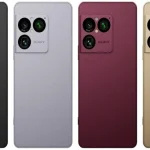
Quick Highlights
- Status: Revealed (Officially Launched in China; Global / India Release Expected)
- Starting Price: Approximately ₹33,000 INR
- Engine / Processor Details: MediaTek Dimensity 9500s (3nm Architecture)
- Battery & Range / Charging: 9,000 mAh Silicon-Carbon Battery with 100W Wired Fast Charging
- Major Upgrade: Massive 9,000 mAh Battery and Upgraded IP69K Environmental Ingress Protection
- Segment Position: Premium Performance Mid-Range / Flagship Killer
Technical Coverage & Ecosystem Analysis Of Redmi Turbo 5 Max
Motor Configuration & Architecture
At the core of the redmi turbo 5 max performance profiles is the customized MediaTek Dimensity 9500s system-on-chip. Built on a cutting-edge 3nm foundry fabrication process, the octa-core processor layout features a high-performance Cortex-X4 prime core clocked at 3.21 GHz. This architecture is supplemented by three Cortex-A720 performance cores running at 3.0 GHz, two secondary Cortex-A720 cores at 2.8 GHz, and two high-efficiency Cortex-A520 cores running at 2.0 GHz. Graphics compute is driven by an integrated high-tier GPU array that supports hardware-accelerated ray tracing, providing a smooth, high-frame-rate experience across system tasks and demanding gaming workloads.
Battery Capacity & Certified Power Delivery Redmi Turbo 5 Max
The definitive highlight of the smartphone is its massive 9,000 mAh silicon-carbon cell. Moving away from traditional lithium-ion polymer formulations allows the device to pack immense energy density within a chassis depth of just 8.15 mm. The physical dimensions remain highly practical despite the heavy capacity overhead.
The charging infrastructure matches this scale, utilising a 100W wired fast-charging protocol through a standard USB Type-C port. This layout allows the massive power cell to refuel from zero to full capacity in under an hour. Additionally, the device integrates 27W reverse wired charging support, transforming the handset into a high-capacity portable power bank for peripheral accessories and companion devices.





Platform Architecture & Software Ecosystem about Redmi Turbo 5 Max
The hardware infrastructure operates on Xiaomi’s native HyperOS 3 platform, layered directly on top of the Android 16 operating system. This software suite is heavily tuned for high-efficiency memory management and reduced background compute cycles, extracting maximum performance from the LPDDR5X Ultra RAM and UFS 4.1 storage combinations.
On the structural side, durability ratings have seen a substantial upgrade. The phone features an advanced hybrid chassis layer that qualifies for simultaneous IP66, IP68, and IP69K ratings. This configuration ensures the device can withstand submersion in fresh water up to depths of two meters for 30 minutes, alongside specialized protection against high-pressure, high-temperature water jet streams.
Optics & Imaging System on Redmi Turbo 5 Max
The device Redmi Turbo 5 Max features a streamlined dual-camera matrix optimized for natural color reproduction and day-to-day clarity. The primary imaging setup consists of a 50MP Light Hunter 600 wide-angle sensor with an f/1.5 aperture, stabilized by an optical image stabilization (OIS) assembly to preserve clarity during high-movement or low-light scenarios. This is supported by a foundational 8MP ultra-wide lens with an f/2.2 aperture for wider field-of-view tracking. The front display features a central punch-hole housing a 20MP front camera module calibrated for stable high-definition video conferencing and facial recognition tracking.



Specifications Table for Redmi Turbo 5 Max
| Feature | Details |
|---|---|
| Processor | MediaTek Dimensity 9500s (3nm process, Octa-Core up to 3.21 GHz) |
| Memory Configurations | 12GB / 16GB LPDDR5X Ultra RAM |
| Storage Configurations | 256GB / 512GB / 1TB UFS 4.1 Internal Storage (Non-expandable) |
| Display Panel | 6.83-inch 1.5K (1280×2772) AMOLED, 120Hz Refresh Rate, 3500 nits Peak |
| Primary Rear Camera | 50MP Light Hunter 600 (f/1.5, OIS, 4K Video Support) |
| Secondary Rear Camera | 8MP Ultra-Wide Angle Lens (f/2.2) |
| Front Selfie Camera | 20MP Wide-Angle Sensor (f/2.2) |
| Battery Metrics | 9,000 mAh Silicon-Carbon with 100W Wired Fast Charging |
| Operating System | HyperOS 3 based on Android 16 |
| Ingress Protection | Certified IP66, IP68, and IP69K Water/Dust Resistance |
| Physical Proportions | 162.99 mm × 77.93 mm × 8.15 mm; Weight: 219 grams |
Industry & Market Context
The deployment of the redmi turbo 5 max underscores a larger structural trend taking place within regional tech markets. As high-end flagship devices climb into higher price brackets, premium mid-range models are assuming the traditional “flagship killer” mantle. The addition of a 9,000 mAh battery indicates that brands are prioritizing long-term hardware endurance over superficial design gimmicks.
By utilizing sub-flagship 3nm processors, Xiaomi avoids the high thermal envelopes and steep component costs associated with unthrottled tier-one silicon. This approach allows them to allocate resources toward enhanced chassis durability, display visibility, and battery capacity. It represents a practical approach to hardware evolution that meets the realistic expectations of everyday consumer upgrade cycles.
Performance Dynamics: Redmi Turbo 5 Max vs. Standard Turbo 5
When compared to its direct stablemate, the standard Turbo 5 model, the redmi turbo 5 max offers clear differentiators intended for distinct consumer profiles.
- Processing Infrastructure: The baseline Turbo 5 features a MediaTek Dimensity 8500 Ultra platform, which delivers competitive daily processing capabilities. The Max model steps up to the Dimensity 9500s, providing improved sustainable graphical throughput and enhanced AI compute capabilities.
- Chassis and Ergonomics: The standard model features a 6.59-inch display and carries a total weight of 204 grams, making it a highly compact daily driver. In comparison, the Max version expands the footprint to a 6.83-inch AMOLED panel, bringing the total weight to 219 grams due to the increased battery volume.
- Endurance Footprint: While the standard variant’s 7,560 mAh battery capacity sits comfortably above the current industry average, the Max variant’s 9,000 mAh capacity targets heavy users who want extended usage cycles without needing a mid-day top-up.
Pricing & Regional Variations for Redmi Turbo 5 Max
The smartphone is currently retailing across authorized retail channels in mainland China. Pricing for the initial memory and storage variations is structured as follows:
- 12GB RAM + 256GB Storage: CNY 2,499 (Approx. ₹33,000 INR)
- 16GB RAM + 256GB Storage: CNY 2,799 (Approx. ₹37,000 INR)
- 12GB RAM + 512GB Storage: CNY 2,999 (Approx. ₹40,000 INR)
- 16GB RAM + 512GB Storage: CNY 3,299 (Approx. ₹44,000 INR)
Note: Global and Indian market pricing structures have not been locked in. Final localized costs typically fluctuate based on regional distribution strategies, local import taxation structures, and supply-chain variations.
Reality Check (Transparency Block)
- Officially Confirmed: Mainland China launch dates, baseline pricing models, and complete technical specifications including the Dimensity 9500s SoC and 9,000 mAh battery configuration.
- Industry Reported: Ongoing certification tracking via international regulatory bodies points to an impending wider release.
- Expected Timeline: A broader regional rollout, including an expected launch in India, is projected to materialize later this year.
- Not Announced Yet: Exact localized pricing structures, launch-day promotion bundles, and carrier-specific distribution partnerships for markets outside of China.
Ownership & Longevity Insight
The integration of advanced silicon-carbon battery materials represents a significant long-term benefit for device ownership. These cells degrade at a noticeably slower rate over extended charging cycles compared to traditional lithium-polymer batteries. This means the phone can maintain a healthy maximum capacity even after multiple years of heavy usage.
Furthermore, the presence of combined IP68 and IP69K ingress ratings lowers the risk of accidental liquid damage, which is a common point of hardware failure. From a long-term value perspective, the combination of high-tier processing power and durable build materials helps protect the device’s resale value, making it a reliable choice for users on extended upgrade cycles.
FAQs About Redmi Turbo 5 Max
Q1: What is the key performance difference between the redmi turbo 5 max and the standard variant?
The Max variant features a more advanced MediaTek Dimensity 9500s chipset, a larger 6.83-inch AMOLED display, and an expanded 9,000 mAh battery. The standard model uses a Dimensity 8500-Ultra chip, a 6.59-inch screen, and a 7,560mAh battery.
Q2: Does the device feature expandable storage via a microSD card slot?
No, the device utilizes an integrated UFS 4.1 memory array. It does not support external storage expansion, meaning buyers must choose their preferred storage capacity (256GB, 512GB, or 1TB) at the point of purchase.
Q3: What exactly do the IP68 and IP69K ratings mean for real-world protection?
The IP68 rating guarantees protection against dust entry and fresh-water submersion for up to 30 minutes at a maximum depth of two meters. The IP69K certification ensures the internal components remain sealed against high-pressure, high-temperature water streams from any angle.
Q4: Is the 9,000 mAh battery safe for long-term daily fast charging?
Yes, Redmi Turbo 5 Max the device utilizes a next-generation silicon-carbon anode composition. This battery chemistry provides higher energy density and improved thermal management during high-voltage charging, which minimizes cell degradation over extended ownership periods.
Conclusion
The redmi turbo 5 max presents a clear option for power users by prioritizing long battery life and solid performance over short-lived design trends. It bridges the gap between mid-range pricing and flagship capability, offering a practical choice for consumers who want reliability and a long lifecyle from their hardware. As mobile software demands continue to increase, the combination of a high-capacity battery, durable build quality, and an efficient 3nm processor keeps the device well-positioned for the future.