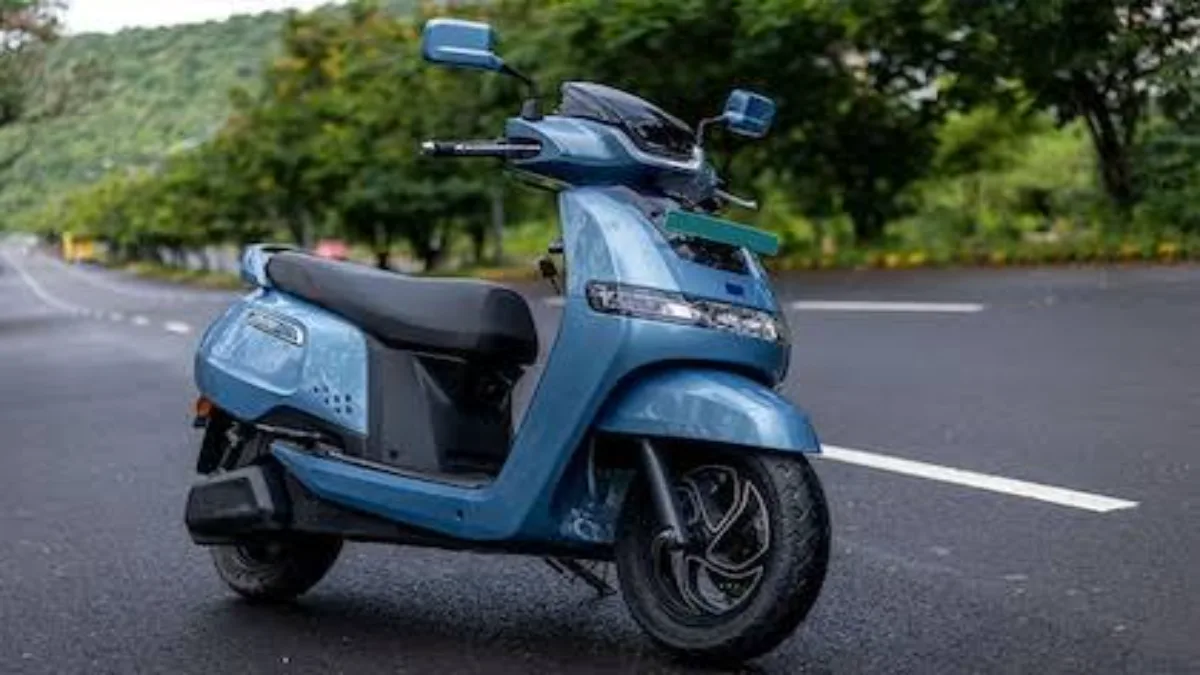
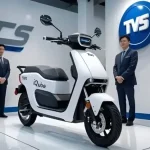
The TVS iQube S has been updated with a larger 4.7kWh battery, offering an enhanced IDC range of 175km and new dual-tone color options
The TVS iQube S has officially received its most significant mid-cycle update yet, featuring a substantial battery capacity increase to address the evolving needs of urban commuters. TVS Motor Company’s latest move replaces the outgoing 3.5kWh variant with a new 4.7kWh pack, effectively pushing the electric scooter into a higher tier of endurance.
This update comes at a time when the Indian electric two-wheeler market is shifting from “early adoption” to “utility-first” demand. By expanding the range, TVS is positioning the iQube S as a more viable primary vehicle for those with longer daily commutes. The launch also introduces a fresh visual palette, ensuring the model remains competitive against a growing field of rivals.
Quick Highlights
- Status: Officially Launched
- Starting Price: ₹1,37,142 (Ex-showroom, Delhi)
- Motor Details: BLDC Hub Motor (4.4kW Peak)
- Range: 175 km (IDC Certified)
- Major Upgrade: 4.7kWh Battery Pack & Dual-Tone Colors
- Segment Position: Premium Family Electric Scooter
EV Performance & Engineering Insight
Motor Configuration
The TVS iQube S continues to utilize a hub-mounted BLDC motor, which is lauded for its silent operation and low maintenance. The peak power output remains steady at 4.4kW, providing a balance between pep and efficiency. It achieves a 0–40 kmph sprint in a respectable 4.3 seconds, maintaining its character as a smooth, predictable city performer rather than an aggressive sport scooter.
Battery Capacity & Certified Range
The heart of the update is the 4.7kWh Lithium-ion battery. This is a significant jump from the previous 3.5kWh unit, resulting in a claimed IDC range of 175km. In real-world urban conditions, riders can realistically expect a range of approximately 135–145km, depending on the ride mode. The top speed remains capped at 82 kmph, which is adequate for most intra-city flyovers and arterial roads.
Charging Speed & Compatibility
Despite the larger capacity, TVS iQube has optimized the charging curve. The 4.7kWh variant can be charged from 0 to 80% in approximately 4 hours using the standard portable charger. While it lacks the ultra-fast DC charging seen in some flagship performance EVs, the overnight charging efficiency remains a strong point for its target audience.

Platform Architecture
The scooter now tips the scales at 128.8 kg, a slight increase due to the heavier battery cells. However, the weight distribution remains low, centered around the floorboard, which helps maintain the iQube’s signature stability. It retains the telescopic front forks and twin rear shock absorbers that have made it one of the most comfortable rides in its class.
Specifications Table
| Feature | Details |
|---|---|
| Battery Capacity | 4.7 kWh Lithium-ion |
| IDC Range | 175 km per charge |
| Peak Power | 4.4 kW |
| Top Speed | 82 kmph |
| Acceleration (0-40 kmph) | 4.3 Seconds |
| Kerb Weight | 128.8 kg |
| Storage Capacity | 32 Litres |
| Display | 7-inch TFT with HMI Controls |
| Wheel Size | 12-inch Alloy (90/90-12 Tyres) |
Industry & Market Context
The 2026 iteration of the TVS iQube S reflects a broader “Range War” in the Indian EV segment. While the base iQube variants (2.2kWh to 3.5kWh) cater to budget-conscious buyers, the “S” variant serves the middle-ground enthusiast who values technology without the extreme price tag of the “ST” trim.
TVS’s strategy relies heavily on “Brand Trust”—leveraging their massive service network which remains a significant hurdle for newer EV startups. This update ensures that the iQube remains the top-selling electric scooter by offering a configuration that covers the 90th percentile of daily usage patterns.
TVS iQube S vs. Main Competitor: Bajaj Chetak Premium
The primary rivalry in this space is between the iQube S and the Bajaj Chetak Premium.
- TVS iQube S: Offers a superior technological interface with its 7-inch TFT screen, joystick controls, and a slightly higher real-world range with the 4.7kWh pack. It is the choice for users who prioritize “smart” features and under-seat storage (32L).
- Bajaj Chetak: Focuses on “Metal Body” durability and a classic aesthetic. While the Chetak provides a more “solid” feel, the iQube S 4.7kWh now holds a distinct advantage in certified range (175km vs Chetak’s 127km).
- Verdict: The iQube S is the practical tech-heavy choice, while the Chetak remains the lifestyle choice for those valuing traditional build quality.
Price & Variants
The TVS iQube S 4.7kWh is positioned as a standalone premium variant within the “S” sub-brand.
- Price: ₹1,37,142 (Ex-showroom, Delhi)
- Colors: Magnificence Purple Beige, Harlequin Blue Beige, and Titanium Grey Matte.
- Subsidies: The price is inclusive of the current EMPS (Electric Mobility Promotion Scheme) or relevant state-level incentives where applicable.
Reality Check (Transparency Block)
- Officially Confirmed: 4.7kWh Battery, 175km IDC Range, New Colors, Price.
- Industry Reported: Real-world range expected to be around 140km in Eco Mode.
- Expected Timeline: Deliveries have commenced across major tier-1 cities.
- Not Announced Yet: Any plans for an “S” variant with 1500W fast charging (currently reserved for the ST).
Ownership Insight
The shift to a larger battery typically raises concerns about replacement costs, but TVS iQube offers a comprehensive 3-year/50,000 km warranty. With electricity costs averaging ₹7–9 per unit, a full charge of the 4.7kWh battery costs roughly ₹35–40, making the running cost approximately ₹0.25 per km—significantly lower than any internal combustion engine (ICE) counterpart.
FAQs
1. What is the actual range of the TVS iQube S 4.7kWh?
While the IDC (Indian Drive Cycle) range is 175km, the real-world range is expected to be between 135km and 145km in Eco mode, and approximately 110km in Power mode.
2. Can I upgrade my old 3.5kWh iQube S to the 4.7kWh battery?
No, battery swaps between different variants are not officially supported due to differences in weight distribution, BMS (Battery Management System) tuning, and software configurations.
3. How long does it take to charge from 0 to 100%?
Using the 650W home charger, a full 0–100% charge takes roughly 5 hours and 30 minutes, while the 0–80% “quick charge” happens in about 4 hours.
Conclusion
The TVS iQube S 4.7kWh is a calculated response to the demand for “anxiety-free” urban mobility. It doesn’t reinvent the wheel; instead, it perfects a proven platform by adding the one thing users wanted most: more distance. For the family buyer or the daily professional who needs a reliable, tech-enabled, and long-range scooter without the experimental quirks of newer startups, the iQube S remains the gold standard in the 2026 market.